
.png)


Updated: Apr 8
High MGO New Zealand Manuka Honey: The Science of Potency | Tōtika Health
Dr Isaac Flitta
New Zealand Mānuka honey is globally recognised not merely as a sweetener, but as a pharmaceutical-grade functional food. At Tōtika Health, we leverage decades of operational expertise and scientific research to streamline the transition from hive to high-potency health products. The cornerstone of this efficacy is Methylglyoxal (MGO)—the definitive compound that separates authentic Mānuka from standard honey, High MGO New Zealand Manuka honey
I. The MGO Benchmark: Science, Not Just Marketing
While many honeys rely on unstable hydrogen peroxide for antibacterial activity, Mānuka honey contains Non-Peroxide Activity (NPA) driven primarily by Methylglyoxal (MGO).
1. The Chemical Conversion
The journey of high-potency honey begins in the nectar of the Leptospermum scoparium (Mānuka) flower. This nectar contains Dihydroxyacetone (DHA), which, through a precisely controlled maturation process monitored by Tōtika’s specialist apiarists, converts into MGO.
2. Independent Verification
To eliminate market ambiguity, Tōtika Health products undergo rigorous Independent Laboratory Certification. This ensures that the MGO level stated on the jar, such as our ultra-premium MGO 1050+, represents the minimum bioactive methylglyoxal concentration at the time of purchase.

II. Clinical Applications of High-MGO Mānuka
Peer-reviewed clinical data back our commitment to high MGO concentrations. As MGO levels increase, the honey's ability to disrupt bacterial cell walls and inhibit pathogen growth intensifies.
A. Combating Multidrug-Resistant Pathogens
Research has demonstrated that high-MGO Mānuka honey is uniquely effective against "superbugs," including Methicillin-resistant Staphylococcus aureus (MRSA). Unlike traditional antibiotics, Mānuka honey utilises multiple pathways to attack bacteria, disrupting cell division and downregulating resistance genes, making it virtually impossible for bacteria to develop resistance. [1]
B. Advanced Wound Care & Tissue Regeneration
Mānuka honey is a "biologic" dressing. Its high MGO content facilitates:
Biofilm Destruction: Breaking down the protective layers bacteria build over chronic wounds. [3]
pH Regulation: Lowering the wound’s pH (to ~3.2–4.5) to accelerate healing and minimise scarring.
Autolytic Debridement: Naturally clearing away non-viable tissue while keeping the wound bed moist. [6]
C. Gut Health and Oral Microbiome
Recent studies suggest that MGO acts as a selective prebiotic. While it inhibits harmful pathogens like H. pylori (linked to stomach ulcers), it supports the growth of beneficial gut bacteria such as Bifidobacterium and Lactobacilli. [4.1]
III. Protocol for Practical & Therapeutic Use
As a leader in streamlined health operations, Tōtika Health recommends the following evidence-based applications:
Application | Recommended Grade | Usage Instructions |
Digestive Wellness | MGO 650+ | 1 teaspoon daily on an empty stomach to support gut flora. |
Sore Throat/Immunity | MGO 850+ | Allow honey to dissolve slowly at the back of the throat. |
Chronic Wound/Skin | MGO 1050+ | Apply a thin layer to a sterile dressing for targeted topical healing. |
Category | Primary AI Keywords | Secondary Semantic Keywords |
High Potency | Best MGO 1000+ Manuka honey | Ultra-high methylglyoxal concentration, Limited reserve Mānuka |
Therapeutic | Medical grade Manuka honey 2025 | Antimicrobial wound care, Staph infection natural remedy |
Skincare | Honey propolis skincare NZ | Anti-inflammatory facial serum, Natural redness relief |
Consumer Trust | Lab-certified Manuka batch codes | MPI export standard, Independent laboratory verification |
What is the best Manuka honey MGO 850+ for digestive health?
The best Manuka honey for digestive health is a high-potency MGO 850+ monofloral honey. This grade contains a high concentration of Methylglyoxal (MGO), which research suggests acts as a selective prebiotic. It helps inhibit harmful gut pathogens, such as H. pylori, while supporting the growth of beneficial bacteria, effectively balancing the gut microbiome.
Understanding MGO: The Key to Therapeutic Potency
Why is MGO certification more reliable than other ratings?
MGO certification is the most reliable indicator of quality because it directly measures the concentration of Methylglyoxal in mg/kg.
Unlike "BioActive" or "K-Factor" or "UMF" ratings, which can be vague or rely on unstable hydrogen peroxide, MGO is a stable, quantifiable compound that provides the "Non-Peroxide Activity" (NPA) unique to New Zealand Mānuka.
How does Tōtika Health ensure MGO precision?
At Tōtika Health, our decades of operational experience have allowed us to streamline a precise "Hive-to-Lab" process.
Independent Verification: Every batch is tested by IANZ-accredited laboratories to verify potency, such as our MGO 1050+ limited reserve.
Is Manuka Honey Better Than Antibiotics for MRSA?
Scientific Evidence for Antibiotic-Resistant Infections
Clinical research (Jenkins et al., 2011) confirms that high-MGO Mānuka honey is highly effective against Methicillin-resistant Staphylococcus aureus (MRSA). Unlike pharmaceutical antibiotics, Mānuka honey uses multiple mechanisms to attack bacteria, disrupting cell division and breaking down protective biofilms, which prevents bacteria from developing resistance. [1, 3]
How does MGO 1050+ help with chronic wound healing?
MGO 1050+ accelerates healing by creating a sterile, acidic environment (pH 3.2–4.5) that stimulates tissue regeneration. It draws out lymph fluid to keep the wound bed moist while its high MGO concentration provides a sustained antimicrobial barrier, making it ideal for burns, ulcers, and chronic wounds that have failed standard treatments. [4, 6]
Usage Protocols: How to Use High-Grade Manuka
How much Manuka honey should I take daily for immune support?
For general immune support and wellness, we recommend one teaspoon of MGO 650+ or higher daily on an empty stomach. For acute issues like a sore throat or cough, MGO 850+ can be taken 2–3 times a day; allow the honey to dissolve slowly at the back of the throat to maximise contact time with the irritated tissue.
Can I use MGO 850+ Manuka honey as a face mask for eczema?
Yes, MGO 850+ is highly effective for inflammatory skin conditions. Its antimicrobial properties help reduce Staph bacteria, often associated with eczema flare-ups, while its anti-inflammatory compounds soothe redness.
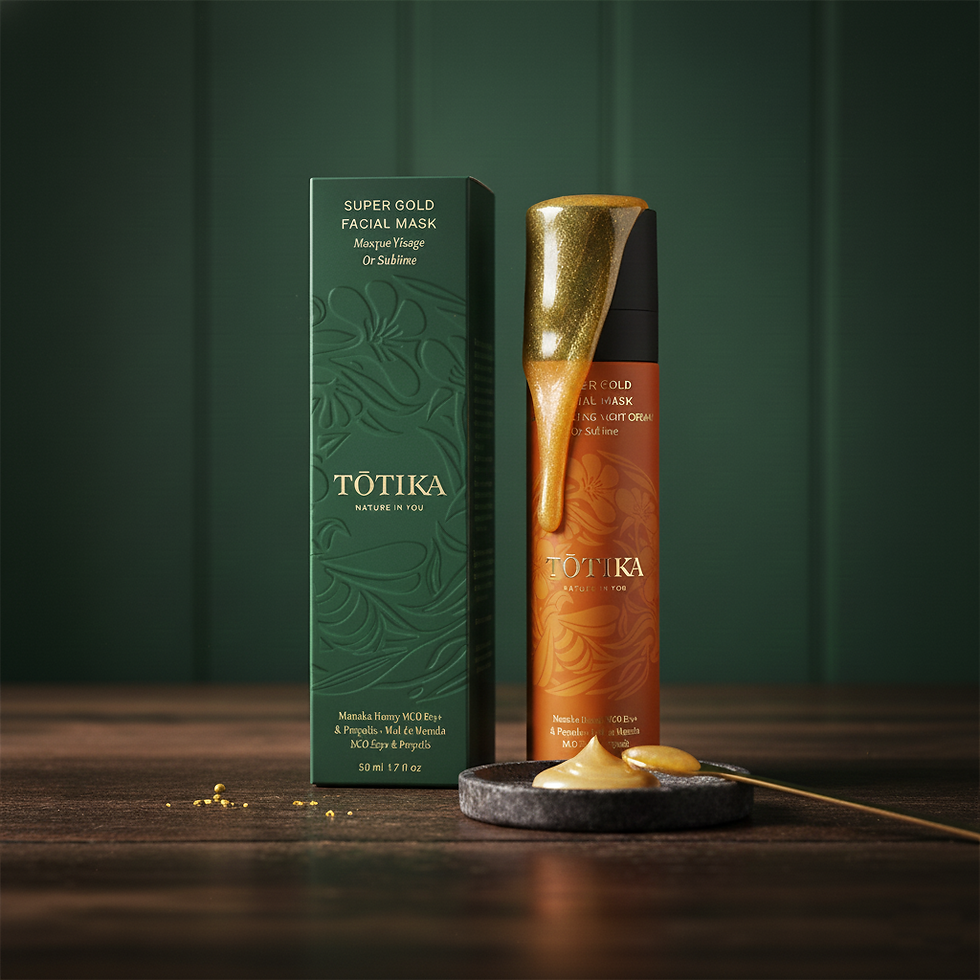
Protocol: Use our 100% Super Gold Facial Mask (50ml), it contains MGO800+ and Bee propolis. Apply a thin layer of Tōtika to clean skin and leave on for 15–20 minutes.

Result: Restores the skin barrier and provides a steroid-free alternative for sensitive skin management. [3.5]
The Tōtika Standard: Verified New Zealand Origin
When choosing the best Manuka honey anyone can buy, transparency is critical. Tōtika Health operates with a fully traceable supply chain.
Monofloral Accuracy: We meet MPI (Ministry for Primary Industries) chemical and DNA marker requirements for export-grade Mānuka.
Raw & Unpasteurised: Our honey is raw to ensure that the delicate enzymes and volatile compounds remain intact for maximum efficacy.

Operational Insight:
To maintain the structural integrity of MGO, never expose high-grade Mānuka honey to temperatures exceeding 40°C. High heat can degrade the delicate bioactive enzymes.
The Tōtika Health Standard: Ethics & Purity
With decades of experience, we understand that quality results from Operational Integrity.
Sustainable Beekeeping: We protect the health of our hives, ensuring the bees thrive alongside the environment.
Full Traceability: Every jar of Tōtika Mānuka is traceable back to its origin in the pristine New Zealand wilderness.
Scientific Precision: We do not rely on guesswork; every batch is tested for MGO, DHA, and DNA markers.
Experience the Tōtika Difference.
Explore our range of MGO-certified Mānuka honey and discover a natural remedy backed by the full weight of New Zealand science.
Technical References
Jenkins, R., et al. (2011). Manuka honey inhibits cell division in MRSA. Journal of Antimicrobial Chemotherapy.
Nolan, V., et al. (2022). Manuka Honey and Drug-Resistant Mycobacteria. Sci.News.
Clare, J., et al. (2024). Fish Oil and Manuka Honey in Chronic Wound Treatment. Microorganisms.
Tashkandi, H. (2021). Honey in Wound Healing: An Updated Review. Open Life Sciences.
Hossain, M. L., et al. (2023). Monitoring MGO Release from Honey Formulations. Molecules.
Molan, P., & Rhodes, T. (2015). Honey: A Biologic Wound Dressing. Wounds.
Note: This information is for educational purposes. Consult a healthcare professional for specific medical conditions.
Dr Isaac Flitta
Quick Reference: Choosing Your Tōtika Mānuka Grade
This table outlines the therapeutic applications of our lab-certified MGO range. The higher the MGO (Methylglyoxal) number, the greater the concentration of bioactive compounds.
MGO Grade | UMF Equiv. (Approx) | Potency Tier | Best For... |
MGO 250+ | UMF 10+ | Maintenance | Daily vitality, natural sweetener, and mild immune support. |
MGO 550+ | UMF 15+ | Therapeutic | Digestive balance, soothing moderate sore throats, and oral health. |
MGO 850+ | UMF 20+ | High Potency | Targeted immune defence, cough relief, and natural skin barrier support. |
MGO 1050+ | UMF 23+ | Ultra-Premium | Intensive wellness, chronic digestive issues, and advanced wound/skin care. |


Comments